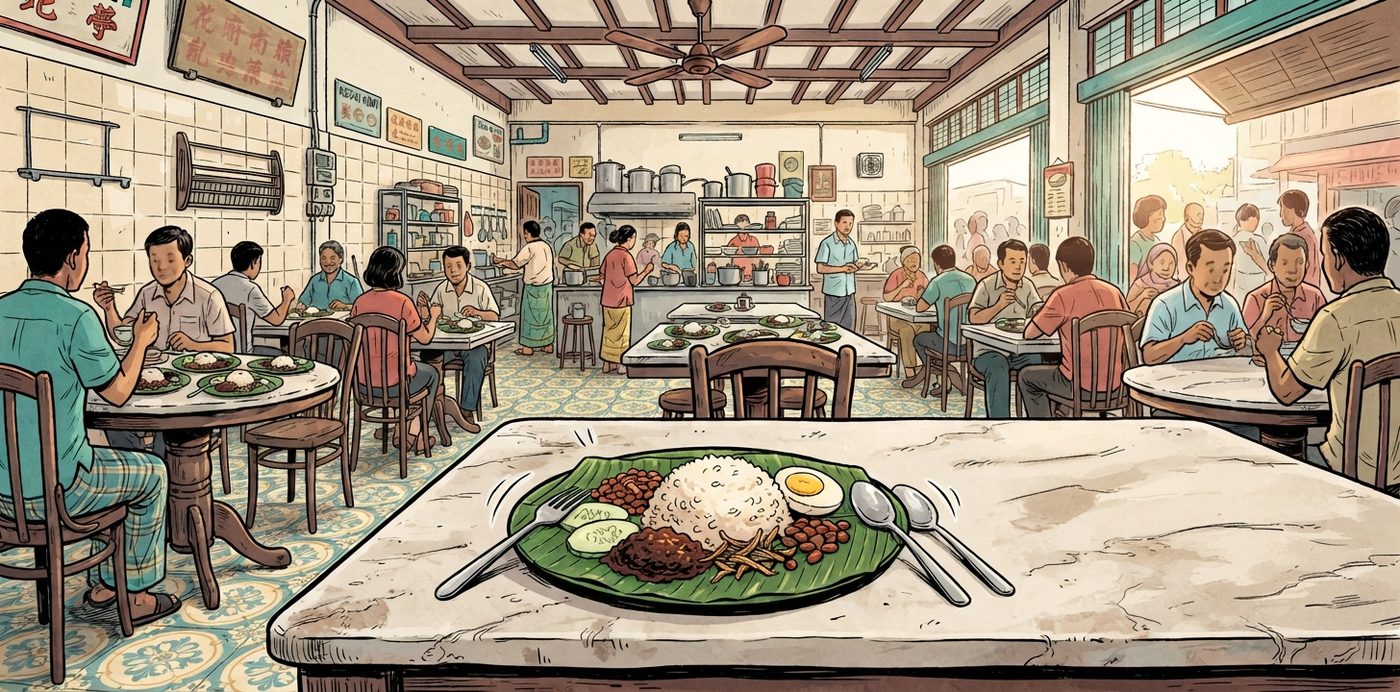
Walk into this kopitiam and you would guess two things sell hardest: nasi lemak on the plate and Kopi O in the cup. Eleven months of real orders, 2,421 of them, say only half of that is true. Nasi lemak is not just popular, it is the shop. Kopi O is an afterthought.
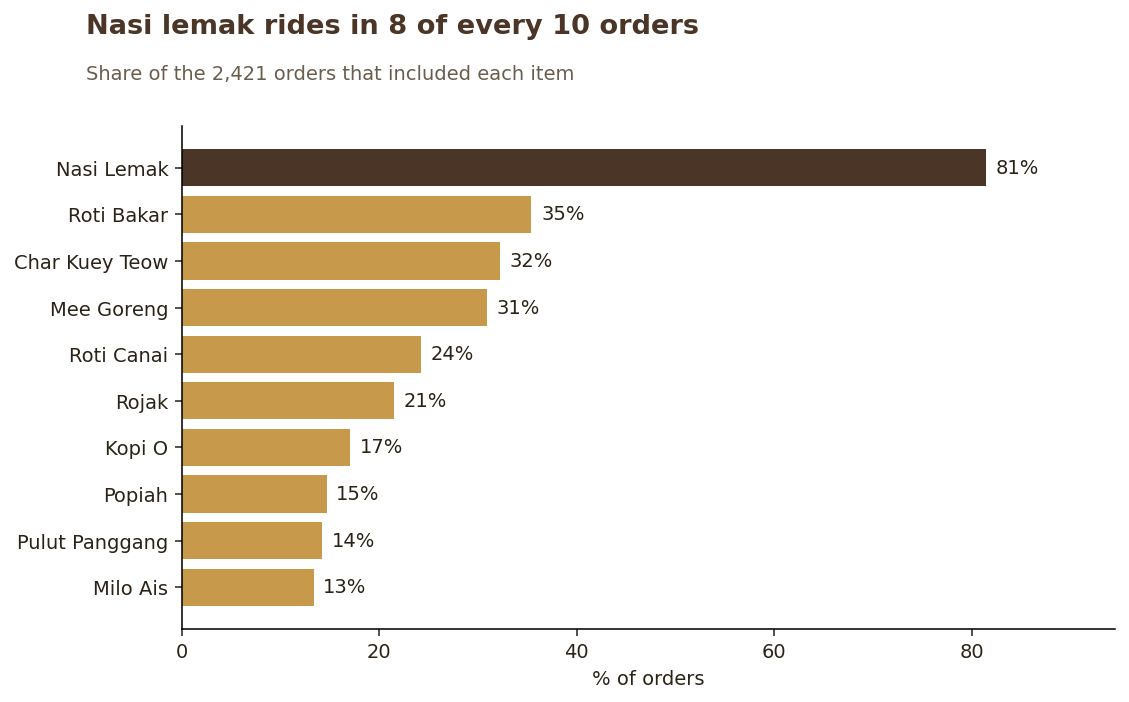
Nasi lemak shows up in 81.5% of all orders and makes up nearly a third of every item sold. Kopi O, the drink most people picture first, lands at number seven, in only 17% of orders. The gap between the two is the most useful thing this data has to say, and it points to a clear set of menu decisions.
The numbers
81.5%
of orders include nasi lemak
#7
where Kopi O actually ranks
85%
of everything sold is food
4.48
items in the average order
“Nasi lemak is not a favorite here, it is the whole shop.”
What the data shows
1. Nasi lemak is the anchor, not just a favorite
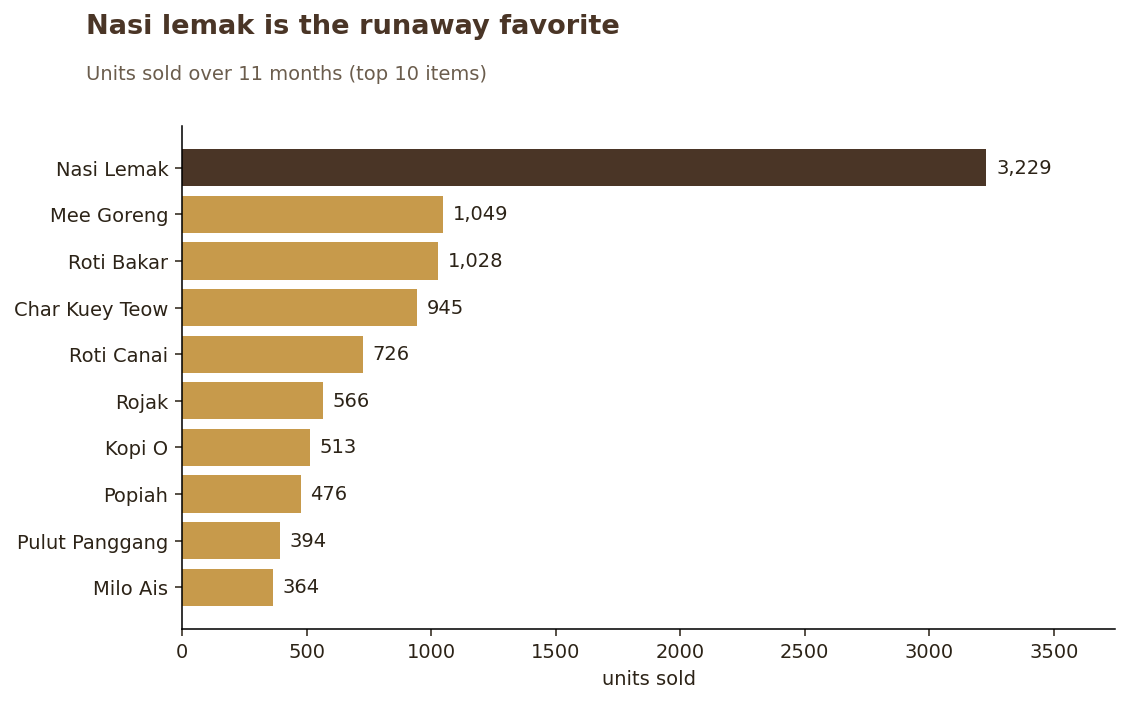
Nasi lemak sold 3,229 plates, 29.8% of all units, more than the next three items combined. Four out of five orders carry it. A dish this central is not a menu item to manage, it is the reason people come.
The rule is simple: nasi lemak must never run out, and the kitchen's morning should be built around it. A sold-out nasi lemak at 10am is not a small miss, it is most of the day's demand walking away.
2. Kopi O is not the favorite everyone assumes
Here is the comforting story to challenge: we are a kopitiam, so of course Kopi O sells. The orders disagree. Kopi O appears in 17% of orders and 4.7% of units, seventh on both counts. Six food items outsell it.
That does not mean drop it, it means stop building pricing, promotions and stock planning around a drink that only one in six customers buys. The attention Kopi O gets in the owner's head is far larger than the attention it gets from customers.
3. This is a food shop, not a drinks shop
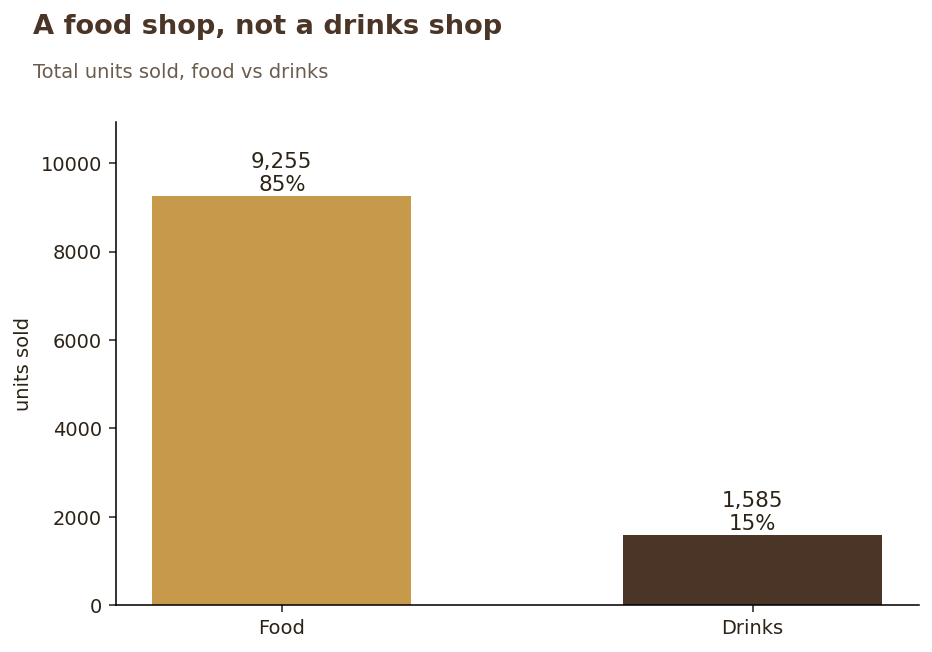
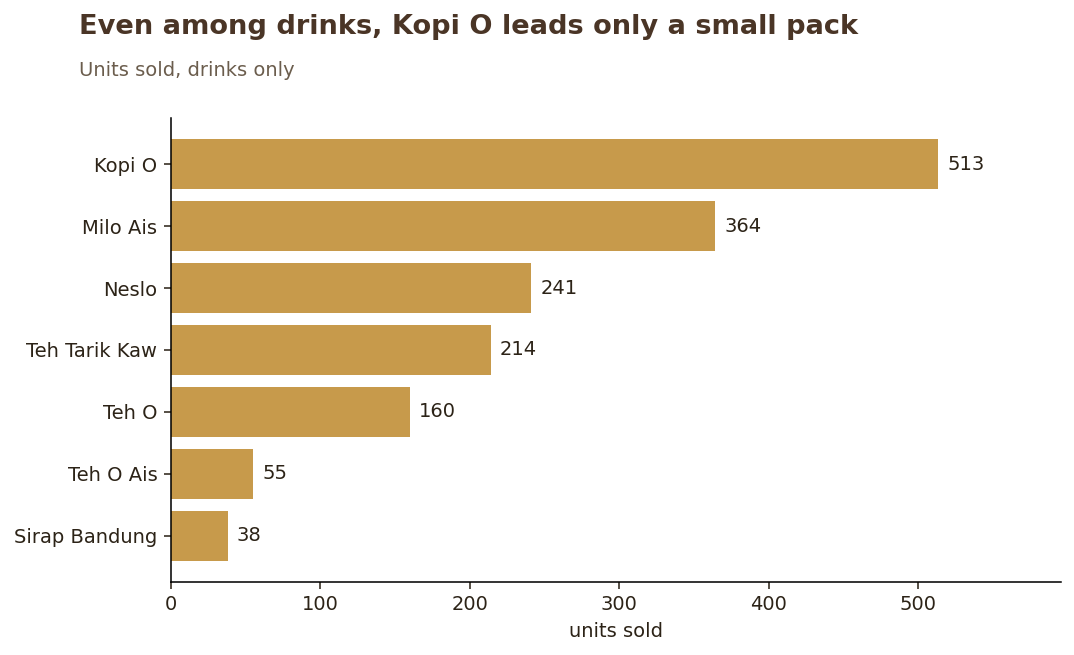
Group the menu into food and drinks and the shape of the business is obvious: food is 85% of everything sold, drinks just 15%. Even the best-selling drink trails six different foods.
Customers come here to eat, and the drink is a small add-on to the plate. Every decision, the counter layout, the specials, the photos out front, should lead with food and treat drinks as the thing you tack on at the till.
4. The reliable seconds are three cooked foods
Behind nasi lemak sit three dependable seconds: mee goreng, roti bakar and char kuey teow, each in roughly 30 to 35% of orders. These pair with nasi lemak and fill the average 4.48-item order. Keep them always available and prep them alongside nasi lemak.
Among drinks, Kopi O leads only a small pack, as the chart shows, so the drinks menu can stay lean without losing sales. Trim it to the few that sell and price them as add-ons.
Method & data
The data is 11 months of the kopitiam's own orders (July 2019 to June 2020), 2,421 valid orders after removing blank rows. Each order lists the quantity of every menu item, so favorites are ranked two honest ways: total units sold, and how often an item appears in an order.
One note on method: we did not rank items by ringgit sales. The order-total column carried an unreliable value (an extreme outlier and unclear units) and the data holds no per-item prices, so a sales-value ranking would be a guess. Counting units and order frequency needs no prices and is the reliable read this data supports.
Conclusion
This is a nasi lemak shop with a menu attached. One dish sits in eight of ten orders and a third of everything sold, three cooked foods back it up, and the drink everyone pictures first is a minor line. The shop's demand is concentrated and food-led, and its planning should be too.
The moves follow directly: protect nasi lemak first and never let it sell out before mid-afternoon; keep mee goreng, roti bakar and char kuey teow always on; trim the drinks menu and price it as an add-on; and lead every promotion and the shopfront with food. None of this needs a bigger budget, only stocking and promoting what customers actually buy.